When news broke that Unitree Robotics was accelerating its plans for a domestic initial public offering, the reaction in Chinese markets was immediate and visceral. Traders didn't just buy shares; they snapped up anything with a connection to the Hangzhou-based robotics startup, triggering a buying frenzy that sent related stocks soaring.
The surge hit on a Tuesday, catching many off guard. It wasn't just about Unitree itself—since it isn't listed yet—but rather a scramble for exposure through its supply chain partners and early investors. The ripple effect turned quiet utility and manufacturing stocks into sudden market darlings overnight.
A Buying Frenzy in the Supply Chain
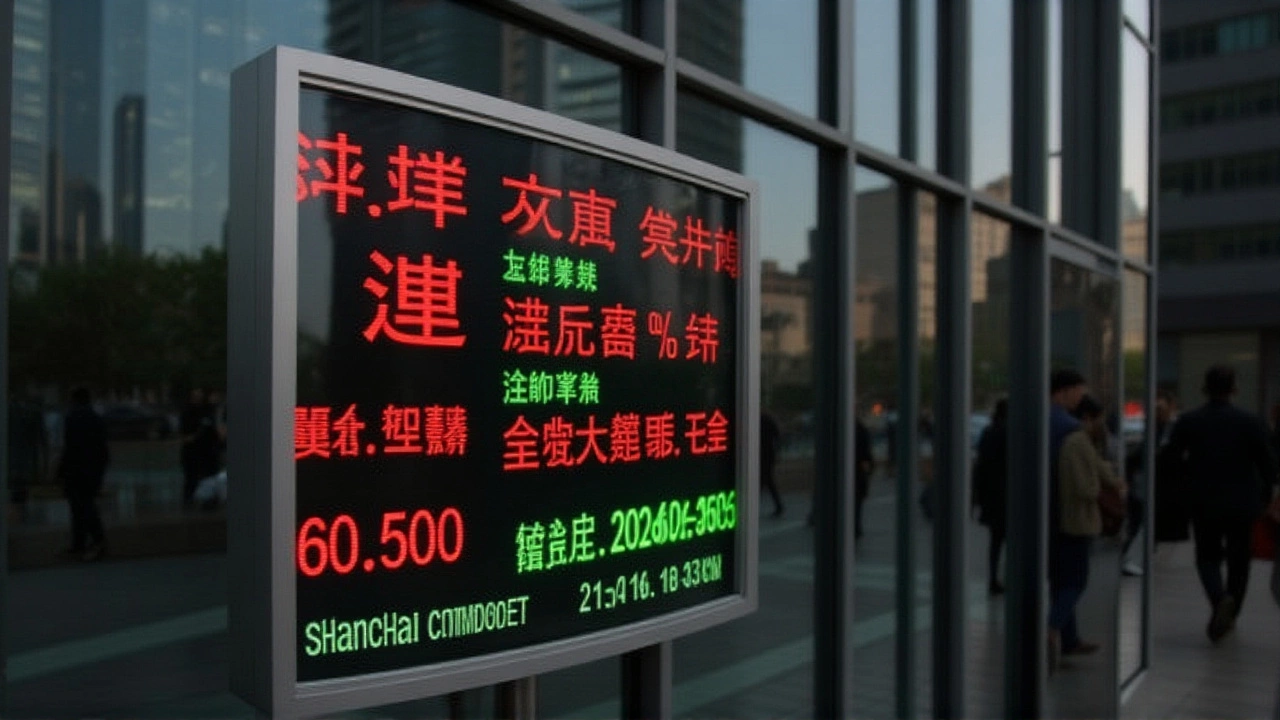
Here’s the thing: you can’t buy Unitree stock directly yet. But you can buy the companies helping build it. On that pivotal Tuesday, Shanghai Dazhong Public Utilities, a supplier of power and gas components, saw its shares jump to 6.03 yuan. That was a 10 percent increase—the maximum daily swing allowed by the Shanghai Stock Exchange main board.
It wasn't alone. Shares of Jiangsu Azure Corp and Hunan Meihu Intelligent Manufacturing also surged. Both are identified as part of Unitree’s supply chain, implying they manufacture critical components or provide essential services for the robot maker. The South China Morning Post described the scene as a "buying frenzy," noting that traders were aggressively positioning themselves ahead of the listing.
Oddly enough, this rally happened despite some shaky fundamentals elsewhere. Reports noted that first-quarter profits for one of the firms involved had slumped more than 50 percent. Yet, the allure of the "Unitree connection" outweighed traditional valuation metrics. Investors were betting on the future, not the past.
The Numbers Behind the Hype
So, why all the excitement? The numbers in Unitree’s prospectus are staggering. The company, formally known as Unitree Technology Co., Ltd., plans to raise approximately 4.2 billion yuan (about US$618 million). To do this, it will issue no less than 40.4464 million A-shares, representing at least 10 percent of its post-issue capital.
But the real story is the growth. In fiscal year 2025, Unitree reported operating revenue of 1.7082 billion yuan. That represents a year-on-year increase of 335.36 percent. For context, most tech giants dream of double-digit growth. Unitree is growing at triple-digit rates, fueled by insatiable demand for its quadruped and humanoid robots.
The money raised won't sit idle. According to data from Futunn, the funds are allocated across four major projects:
- Intelligent Robot Model Development: 2.022 billion yuan
- Robot Main Body Development: 1.11 billion yuan
- New Intelligent Robot Product Development: 445 million yuan
- Manufacturing Base Construction: 624 million yuan
Notice where the bulk of the cash is going? About 85 percent is earmarked for research and development. Only 15 percent goes to building factories. This signals a company still heavily focused on innovation rather than just scaling production.
Who Really Owns Unitree?
Behind the scenes, the shareholder structure reveals deep ties to China’s tech elite. Wang Xingxing, the founder and controlling shareholder, holds 86.714964 million shares, which accounts for 23.8216 percent of the total equity. He’s the visionary driving the ship.
Then there’s Meituan. The food delivery giant is the second-largest shareholder. Through affiliated entities like Hanhai Information, Galaxy Z, and Chengdu Longzhu, Meituan collectively holds 9.6488 percent of the company. This makes sense strategically—Meituan has long explored automation for last-mile delivery, and Unitree’s robots could be key to that future.
Other heavyweights joined the June 2025 funding round, including Alibaba and Tencent. Even Geely (referred to as Gile in some transcripts) threw its hat in the ring. At that time, Unitree’s post-investment valuation stood at 12.7 billion yuan. However, Reuters sources suggest the company is now eyeing a much higher valuation of up to $7 billion (approximately 50 billion yuan) for its IPO.
Timeline and Regulatory Path
The path to listing isn't without its complexities. Unitree has applied to list on the STAR Market, the science and technology-focused board of the Shanghai Stock Exchange. CITIC Securities is acting as the lead sponsor.
There was some confusion recently about whether Unitree was seeking a "green passage"—a fast-track mechanism for strategic industries. Caixin Global clarified in January 2026 that this was never the case. A source close to the matter stated the IPO is progressing smoothly through the standard approval process. The expectation? A listing as early as the end of the first quarter of 2026, or no later than the end of the second quarter.
This timeline aligns with Unitree’s own statements on social media platform X, where the company confirmed it was actively advancing IPO preparations. The STAR Market requires issuers to meet a minimum market capitalization of 10 billion yuan, a threshold Unitree comfortably clears based on its latest valuations.
What This Means for Investors
The surge in partner stocks highlights a broader trend in China’s equity landscape: investor enthusiasm for automation is reshaping how value is assigned to tech-adjacent businesses. When a "humanoid robot juggernaut" like Unitree moves toward public markets, the entire ecosystem feels the tremor.
For retail investors, the lesson is clear. Direct access might be months away, but indirect exposure is already trading at a premium. Whether this rally sustains depends on Unitree’s ability to translate its R&D spending into scalable products. With 335 percent revenue growth behind it, the momentum is undeniable. But as any seasoned trader knows, hype has a way of cooling down once the actual earnings reports start rolling in.
Frequently Asked Questions
Can I buy Unitree Robotics stock right now?
No, Unitree Robotics is not yet publicly traded. It is currently in the process of applying for an IPO on the STAR Market of the Shanghai Stock Exchange. Until the listing is complete and shares begin trading, direct investment is not possible for general retail investors.
Which companies benefited from the recent stock surge?
Several companies with ties to Unitree saw significant gains. Shanghai Dazhong Public Utilities hit its 10 percent daily limit, rising to 6.03 yuan. Jiangsu Azure Corp and Hunan Meihu Intelligent Manufacturing, both supply-chain partners, also experienced sharp increases in share price due to investor speculation.
How much money is Unitree trying to raise?
Unitree plans to raise approximately 4.2 billion yuan (around US$618 million) through the issuance of at least 40.4464 million A-shares. The majority of these funds, roughly 85 percent, will be dedicated to research and development projects for new robot models and technologies.
When is the expected date for the IPO?
Sources indicate that Unitree aims to complete its IPO by the end of the second quarter of 2026. Some reports suggest it could happen as early as the end of the first quarter, provided the standard regulatory approval process proceeds without delays.
Who are the major investors in Unitree?
The controlling shareholder is founder Wang Xingxing, who holds about 23.8 percent. Major institutional investors include Meituan (holding nearly 10 percent through affiliates), Alibaba, Tencent, and Geely, all of whom participated in previous funding rounds.